
Karnataka’s 80th Independence Day celebrations on August 15, 2026, marked more than a ceremonial occasion. At the Field Marshal Manekshaw Parade Ground in Bengaluru, Chief Minister D.K. Shivakumar used his address to outline a broad development vision centred on young people, employment, artificial intelligence, regional growth and long-term economic expansion. Under the theme of “Yuva Karnataka, Nava Bharat” Young Karnataka, New India the Chief Minister announced a series of initiatives intended to connect education more closely with emerging technologies, expand employment opportunities and encourage investment beyond Bengaluru. He also set an ambitious target of taking Karnataka’s economy to USD 3 trillion by 2047.The announcements come as Karnataka continues to occupy an important position in India’s technology and innovation landscape. The new proposals seek to build on that foundation while widening access to employment, skills and investment across the State.
A Focus on Employment and Young People
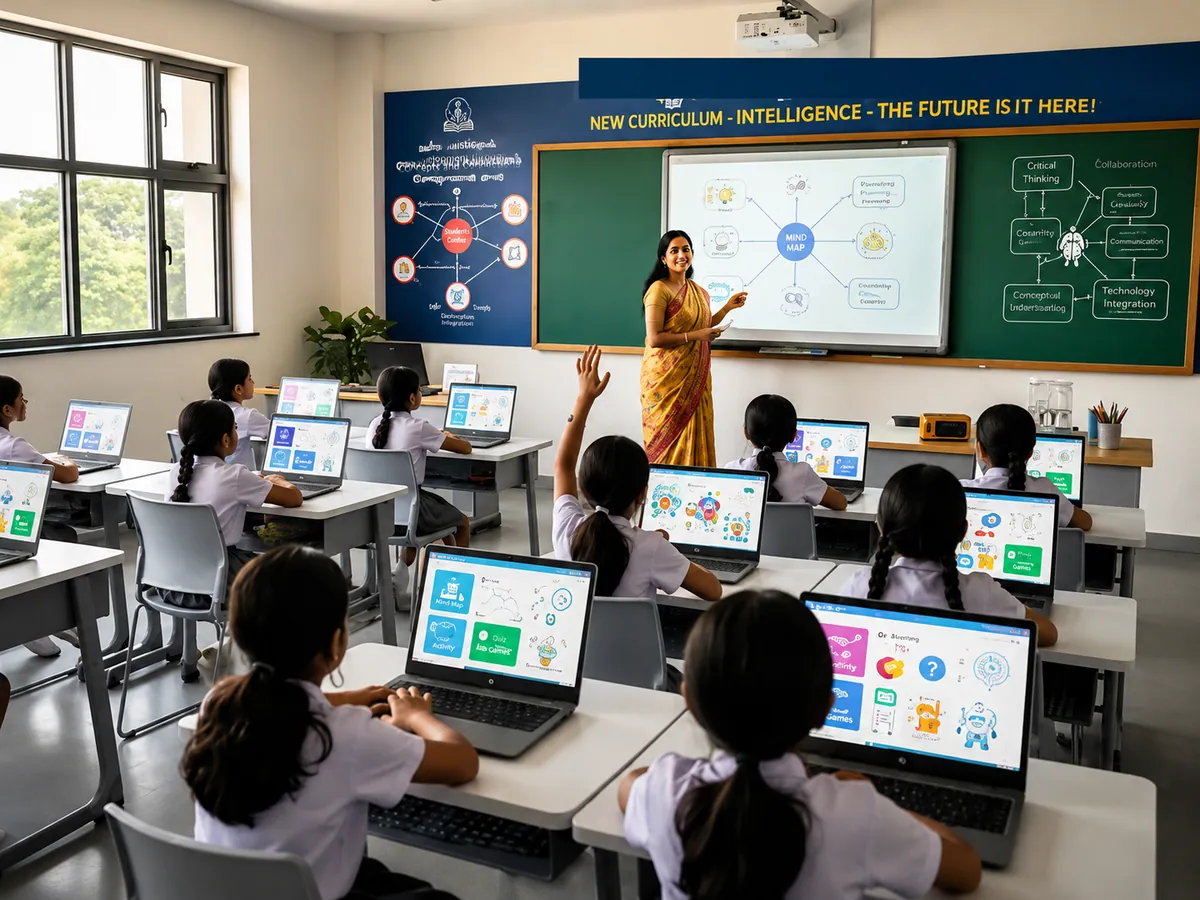
Employment was one of the central themes of the Independence Day address. The State Government has begun the process of filling around 72,000 key vacancies in government departments, with notifications for the posts expected over the coming months, according to the Chief Minister. The initiative is intended to strengthen public services while creating employment opportunities for qualified candidates. Alongside government recruitment, the State plans to strengthen opportunities in the private sector through a proposed digital platform called Yuva Udyoga Setu. The platform is intended to bring job seekers, employers and educational institutions onto a common system, helping connect young people with employment opportunities and industry requirements. The government has also proposed transforming 100 government Industrial Training Institutes into employment-oriented campuses in partnership with private industry. The initial objective is to create employment opportunities for about 10,000 young people through these industry-linked institutions. These measures reflect a broader shift towards linking education and vocational training with the needs of the labour market. For Karnataka, where technology, manufacturing, services and entrepreneurship have become important components of the economy, improving the transition from education to employment could be an important part of future growth.
Udyoga Nidhi and the One-Lakh Job Target
A significant announcement was the proposed Udyoga Nidhi scheme, designed to encourage entrepreneurs and employers to create jobs in the State’s 10 most economically backward districts. Under the announced framework, eligible job creators will receive an incentive of ₹2,500 per new job every month for a period of two years. The government expects the initiative to support the creation of one lakh new jobs. The approach places employment generation at the centre of regional development. Instead of concentrating new opportunities only in established economic centres, incentives are intended to encourage businesses to expand into districts that have historically received less industrial and technology investment. The one-lakh target is an announced government objective rather than a completed outcome. Its eventual success will depend on implementation, participation by businesses, investment flows and the ability of local ecosystems to support new enterprises and employment.
AI Education from the Classroom
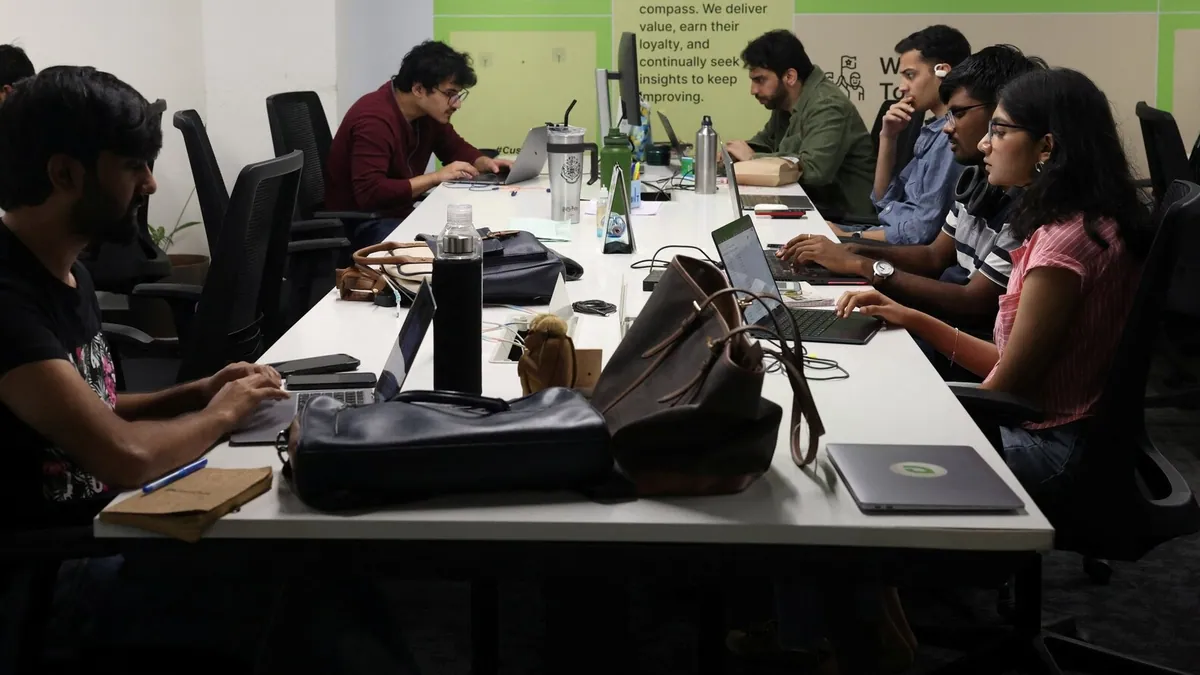
Perhaps the most forward-looking part of the announcement was the proposed expansion of artificial intelligence education across Karnataka’s schools. The Chief Minister announced the AI Akshara Abhiyana and Coding Gurukula initiatives, with AI education proposed from Class 6 onwards. The objective is to introduce students to coding and artificial intelligence at an early stage and prepare them for a rapidly changing technological environment. The announcement is significant because AI is increasingly influencing industries ranging from software and manufacturing to agriculture, finance, healthcare and education. Introducing students to computational thinking and emerging technologies can potentially give them greater familiarity with the tools that will shape future workplaces. The emphasis, however, is not simply on teaching a particular technology. Effective AI education will also require strong foundations in mathematics, science, language, problem-solving, digital literacy and responsible technology use. Teacher preparation and access to appropriate learning resources will therefore be important as the programme develops.
A Public AI University in Bengaluru


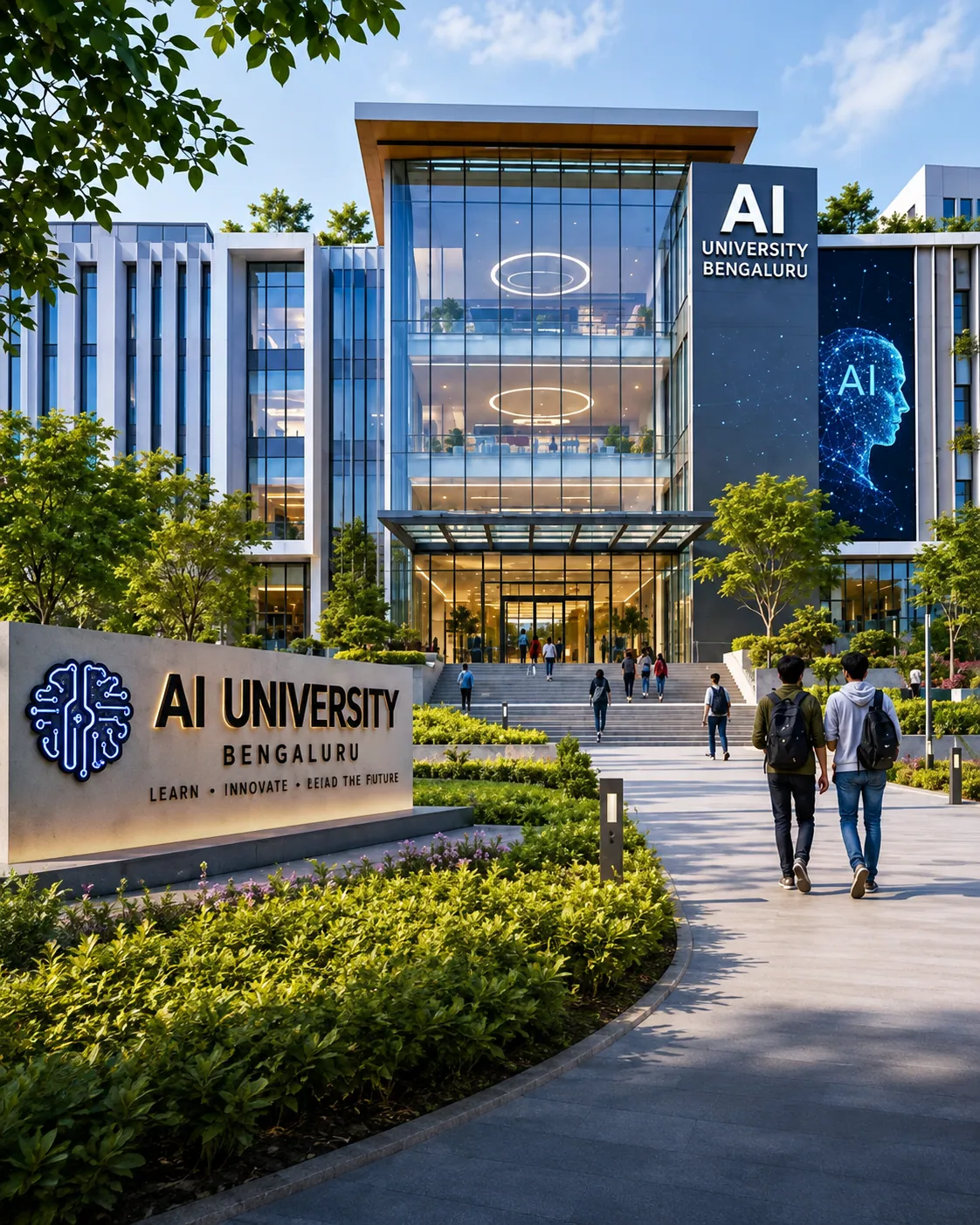
Karnataka is also planning to establish what the Chief Minister described as India’s first government-owned AI university in Bengaluru. AI certificate courses are expected to begin by January 2027, while AI hubs are planned across the State. The proposal builds on Bengaluru’s existing reputation as a major technology and innovation centre. A dedicated public institution focused on artificial intelligence could potentially contribute to education, research, industry collaboration and advanced skills development. At the same time, the planned AI hubs across Karnataka are important because they could help distribute technology-led opportunities beyond the State capital. If supported by appropriate infrastructure, talent development and industry partnerships, such centres could contribute to a more geographically diverse innovation ecosystem.
Taking Technology Beyond Bengaluru
A significant announcement was the proposed Udyoga Nidhi scheme, designed to encourage entrepreneurs and employers to create jobs in the State’s 10 most economically backward districts.
For decades, Bengaluru has been the most visible symbol of Karnataka’s technology economy. The government’s latest plans place greater emphasis on expanding this ecosystem to other parts of the State. Five Global Technology Centres have been proposed in Kalaburagi, Belagavi, Hubballi-Dharwad, Mangaluru and Mysuru. The government has said that ₹4,291 crore has been provided during the 2026–27 financial year for measures aimed at promoting more equitable development. The strategy is closely connected to the wider “Beyond Bengaluru” approach. By developing technology and employment centres in different regions, Karnataka hopes to make better use of local talent while encouraging investment outside the capital. This regional approach could also support smaller cities by creating new opportunities for graduates, entrepreneurs and businesses without requiring all economic activity to be concentrated in Bengaluru.
Building the Foundations for Long-Term Growth
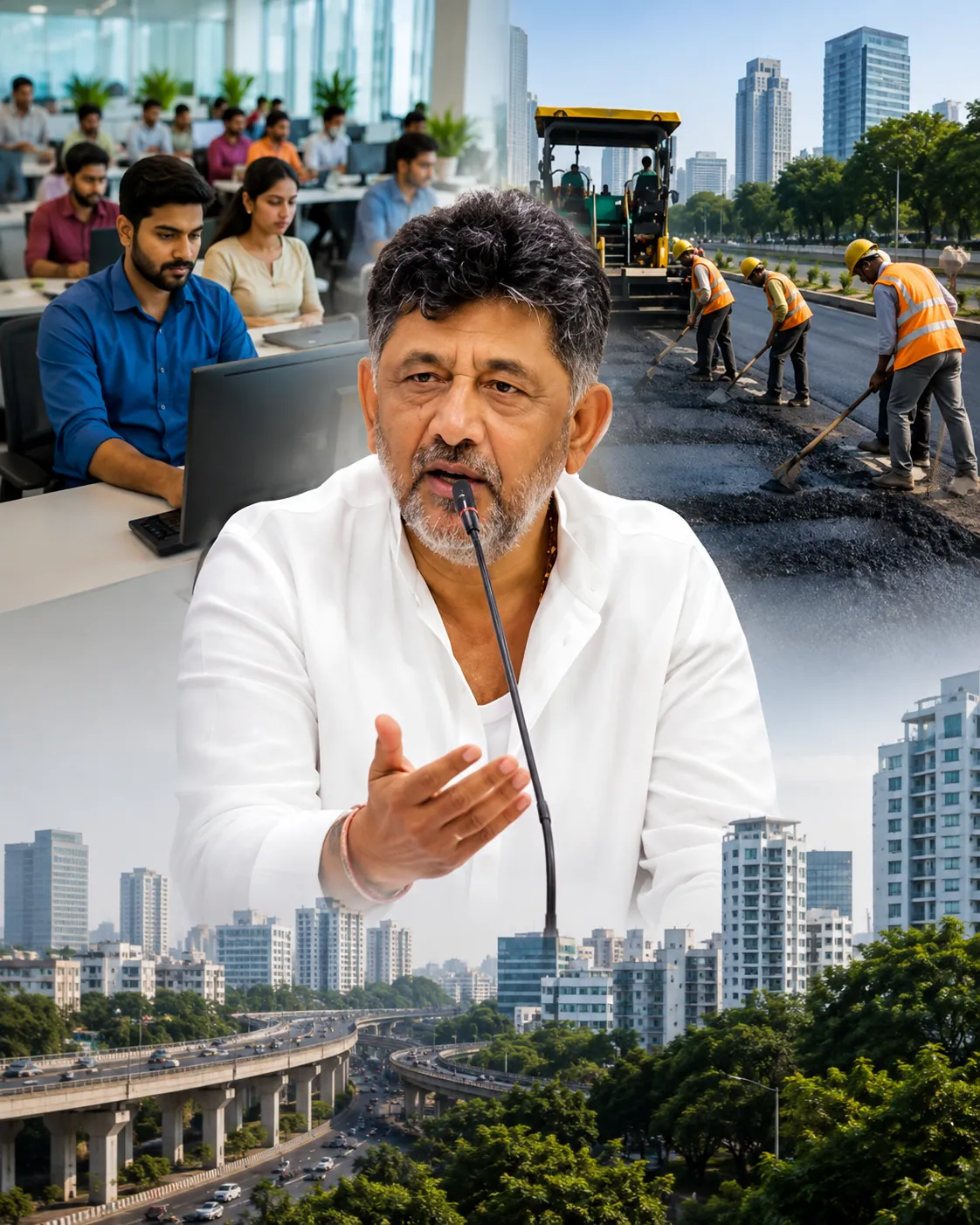
The Chief Minister’s vision extends beyond technology and employment. He has linked Karnataka’s future economic ambitions with investment in education, healthcare, agriculture, industry and infrastructure. The State’s Gross State Domestic Product was cited at ₹32.81 lakh crore in the Independence Day address, while the government has set a long-term goal of transforming Karnataka into a USD 3 trillion economy by 2047, equivalent to approximately ₹320 lakh crore at the figure cited in the announcement. Such a target represents a long-term aspiration rather than a near-term projection. Achieving it would require sustained economic expansion over two decades, continued investment, productivity improvements and growth across multiple sectors. The emphasis on diversification is therefore significant. Karnataka’s future economic performance will not depend only on information technology. Manufacturing, agriculture, infrastructure, education, healthcare, tourism, logistics and emerging technologies can all contribute to the State’s broader economic base.
Technology Meets Agriculture

The Independence Day announcements also included a technology-focused approach to agriculture. The proposed Chief Minister Raitha Chaitanya initiative is intended to combine farmers’ traditional knowledge with modern technology. Among the measures discussed was the use of drones and satellite imagery for crop surveys and real-time information systems. Such technologies can improve the availability of agricultural data and potentially help farmers and authorities understand crop conditions more efficiently. The significance of these technologies lies in their ability to supplement, rather than replace, local knowledge. Karnataka’s agricultural landscape is diverse, and technology will need to be adapted to the realities of different crops, regions and farming communities.
A Broader Vision for Bengaluru
The State’s development agenda also includes several major infrastructure and environmental proposals for Bengaluru. The government has announced plans involving major roads, the Bengaluru Business Corridor, tree parks and the development of seven major lakes. These initiatives form part of the larger effort to strengthen the city’s infrastructure while responding to its environmental and urban needs. Bengaluru’s continued economic importance means that improvements in mobility, public spaces, water resources and urban infrastructure can have implications well beyond the city itself. The proposed Bengaluru Business Corridor, for example, is intended to improve connectivity and support the city’s expanding economic geography. The government has described the project as a 117-kilometre ring-road development with an estimated cost of ₹26,000 crore.
From Announcements to Implementation

The Independence Day address presents an ambitious roadmap for Karnataka. Its strongest common thread is the idea that economic development should be connected with opportunities for young people, technological preparedness and more balanced regional growth. The announced employment schemes, AI education programmes, technology centres and long-term economic target will ultimately be judged by implementation. Creating opportunities requires not only announcements but also effective execution, industry participation, educational capacity and sustained investment. For young people in Karnataka, however, the direction is significant. AI and coding are being brought into the conversation at school level, vocational institutions are being positioned more closely alongside industry, and employment initiatives are being designed to reach districts beyond the traditional technology centres. The larger vision is therefore about more than making Karnataka a bigger economy. It is about preparing its people and institutions for an economy that is increasingly shaped by technology, skills and innovation. As Karnataka moves towards the next phase of its development, the “Yuva Karnataka, Nava Bharat” vision places the State’s young population at the centre of that journey. The coming years will show how effectively these announced initiatives translate into classrooms equipped for the digital age, new businesses, stronger regional economies and meaningful employment opportunities across the State.