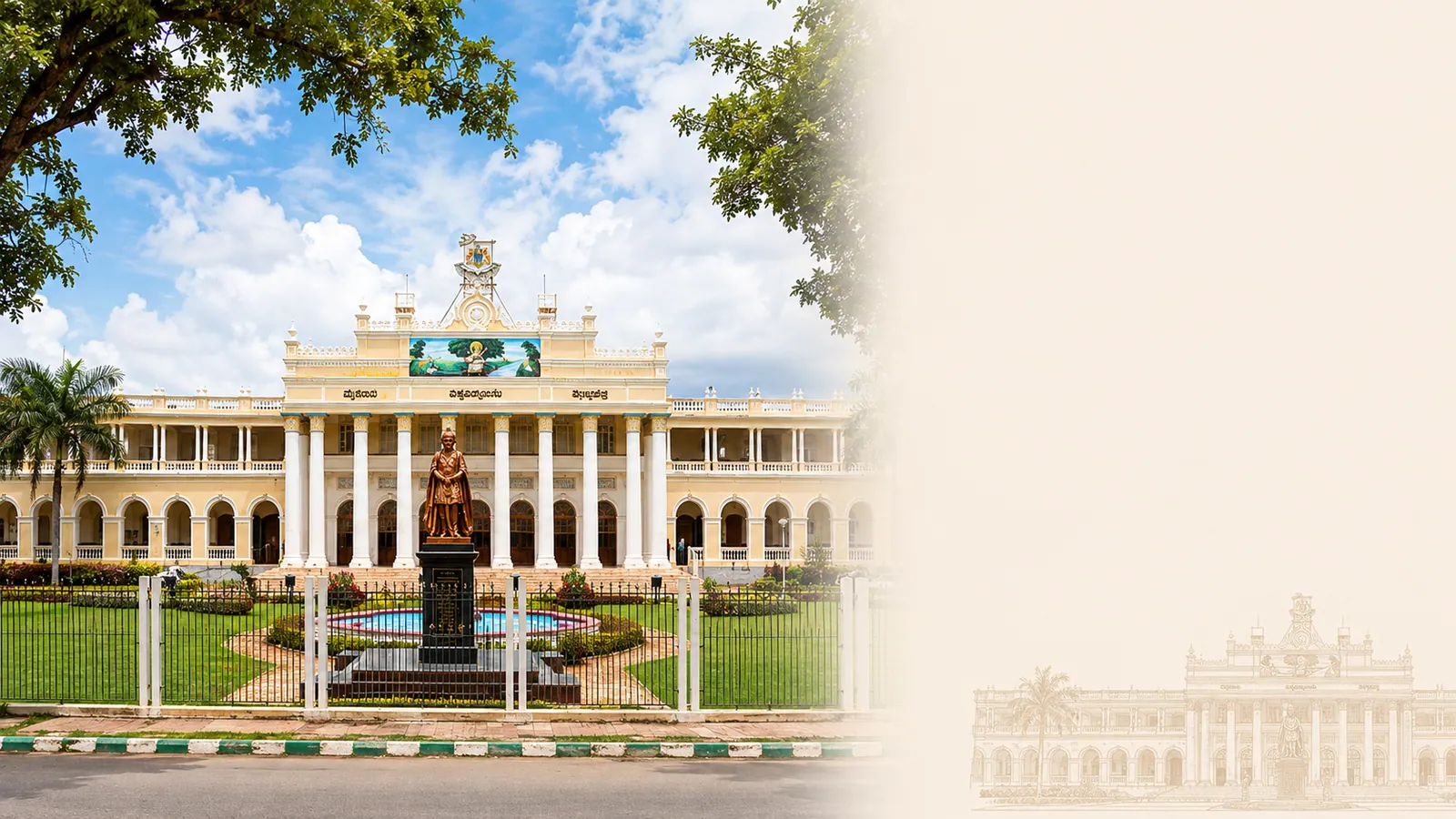
Standing gracefully amid the serene landscape of Mysuru, the University of Mysore is far more than an institution of higher learning—it is a living symbol of India’s educational evolution. Established on 27 July 1916, it is the sixth oldest university in India, the first university in Karnataka, and notably the first university established outside British-administered India. For well over a century, it has nurtured scholars, scientists, administrators, artists and leaders whose contributions have enriched society across generations. Today, as it continues to embrace emerging disciplines and global collaborations, the University remains deeply rooted in the vision that inspired its creation over a hundred years ago.
A Vision Born from Enlightened Leadership


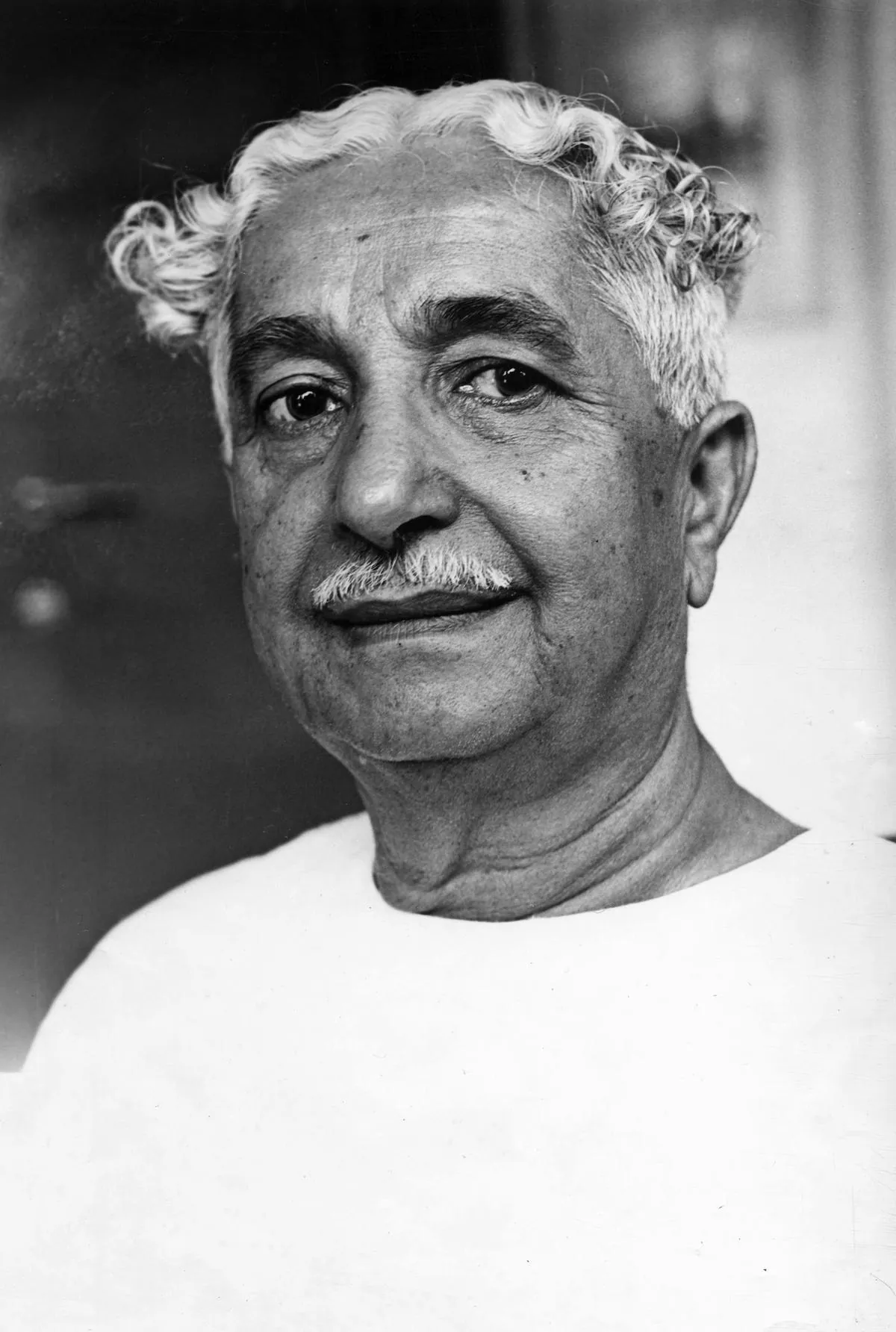
The foundation of the University was the result of extraordinary foresight displayed by Nalvadi Krishnaraja Wadiyar IV, the progressive ruler of the erstwhile Princely State of Mysore, together with the legendary engineer and statesman Sir M. Visvesvaraya. Their shared belief that education should drive social progress led to the establishment of an institution dedicated to intellectual freedom, scientific inquiry and nation-building. This visionary approach transformed Mysuru into one of India’s foremost academic centres. The University’s pioneering spirit continued through the decades, culminating in another landmark achievement when it became the first university in India to receive the prestigious NAAC Five-Star accreditation in 2000, setting a benchmark for quality in higher education.
The Perfect Home for Learning
The University flourishes in Mysuru, Karnataka’s cultural capital, where history, heritage and education coexist harmoniously. Once the royal seat of the Wadiyar dynasty, the city is renowned for its magnificent palaces, majestic temples, tree-lined avenues and artistic traditions. Its enduring reputation for silk weaving, sandalwood craftsmanship and rich cultural heritage provides an inspiring environment for academic pursuits. Located approximately 140 kilometres southwest of Bengaluru, Mysuru offers excellent connectivity by road, rail and air while retaining its peaceful ambience. The city’s pleasant climate throughout the year creates an ideal setting for students, researchers and faculty members from across India and around the world.
A Campus That Inspires Discovery
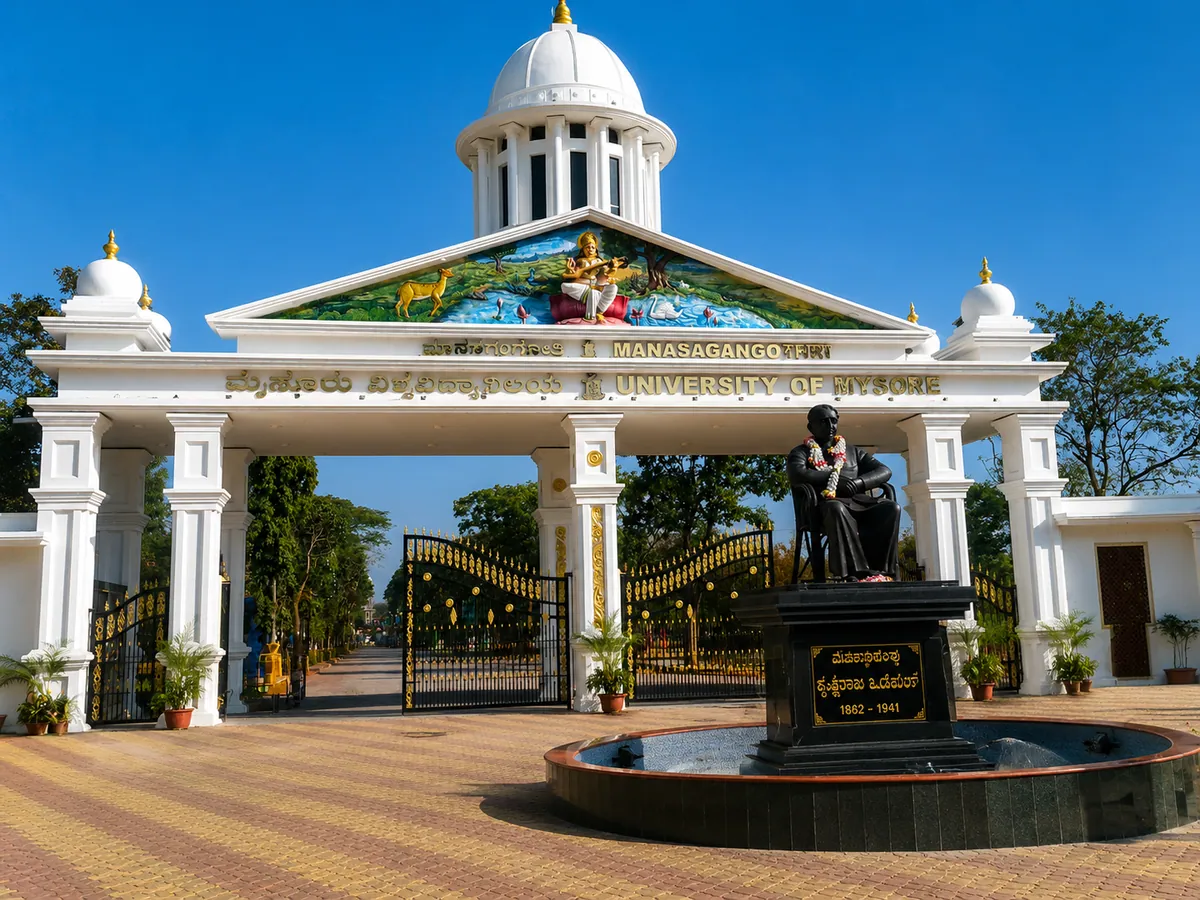
The University’s main campus, Manasagangotri, poetically named by the celebrated Kannada litterateur and former Vice-Chancellor Kuppali Venkatappa Puttappa, reflects the institution’s philosophy of continuous intellectual growth. Spread across nearly 739 acres, the campus combines architectural elegance with abundant greenery, creating an atmosphere that encourages learning, creativity and reflection. One of its defining natural landmarks is the picturesque Kukkarahalli Lake, surrounded by lush vegetation and walking trails that have inspired generations of students and scholars. Beyond Manasagangotri, the University has expanded its academic presence through postgraduate centres at Tubinakere near Mandya, Hemagangotri near Hassan and Dr. B. R. Ambedkar Postgraduate Centre at Chamarajanagar, enabling quality higher education to reach wider regions of southern Karnataka.
Academic Breadth with Research at its Core

Over the decades, the University of Mysore has evolved into one of India’s comprehensive centres of higher education. Today it comprises 85 postgraduate departments offering more than 150 postgraduate programmes, while serving a student community exceeding 120,000 learners across undergraduate, postgraduate and doctoral studies. Its academic network includes 228 affiliated colleges, numerous recognised research centres, outreach centres, specialised programmes and extensive national as well as international collaborations that strengthen research, innovation and academic exchange. Students from nearly 50 countries further reinforce the University’s global character and multicultural academic environment. The University’s five major faculties encompass Arts, Humanities and Social Sciences, Commerce and Management, Education, Law, and Science and Technology. Within these disciplines, emphasis is placed on interdisciplinary learning, practical application and socially relevant research that prepares graduates for rapidly changing professional landscapes.
Advancing Research and Scientific Excellence
Standing gracefully amid the serene landscape of Mysuru, the University of Mysore is far more than an institution of higher learning—it is a living symbol of India’s educational evolution.
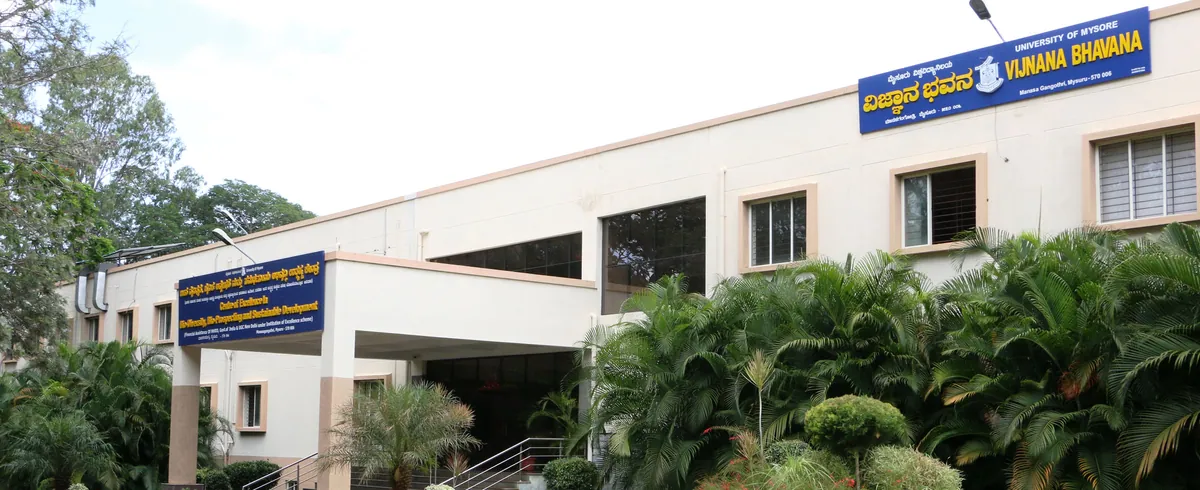
Research has always remained one of the defining strengths of the University of Mysore. Numerous departments enjoy national recognition for their scientific contributions, while faculty members continue to attract competitive research grants from government agencies and international organisations. Several departments are supported under the Department of Science and Technology’s FIST programme, while many others receive recognition through the University Grants Commission’s Special Assistance Programme, reflecting sustained excellence across disciplines ranging from biotechnology and microbiology to political science, journalism and mathematics. The University’s commitment to advanced scientific research received a significant boost when the Government of India recognised it as an Institution of Excellence, supported by a grant of ₹100 crore. This initiative led to the establishment of sophisticated research infrastructure within Vijnana Bhavan, housing advanced facilities for nuclear magnetic resonance, next-generation sequencing, X-ray diffraction, mass spectrometry, imaging and cell culture research. These facilities continue to support cutting-edge investigations in biodiversity, bioprospecting and sustainable development.
Education Designed for a Changing World

Recognising the evolving demands of higher education, the University introduced the Flexible Choice-Based Credit System with Continuous Assessment and Grading Pattern (CBCS-CAGP), giving students greater flexibility in designing their academic pathways while encouraging continuous learning and interdisciplinary engagement. The curriculum is periodically revised to incorporate emerging disciplines, technological advancements and contemporary industry requirements. Beyond classroom instruction, students participate in experiential learning, research projects, internships and community engagement initiatives that cultivate leadership, analytical thinking and professional competence.
A Green and Student-Centred University
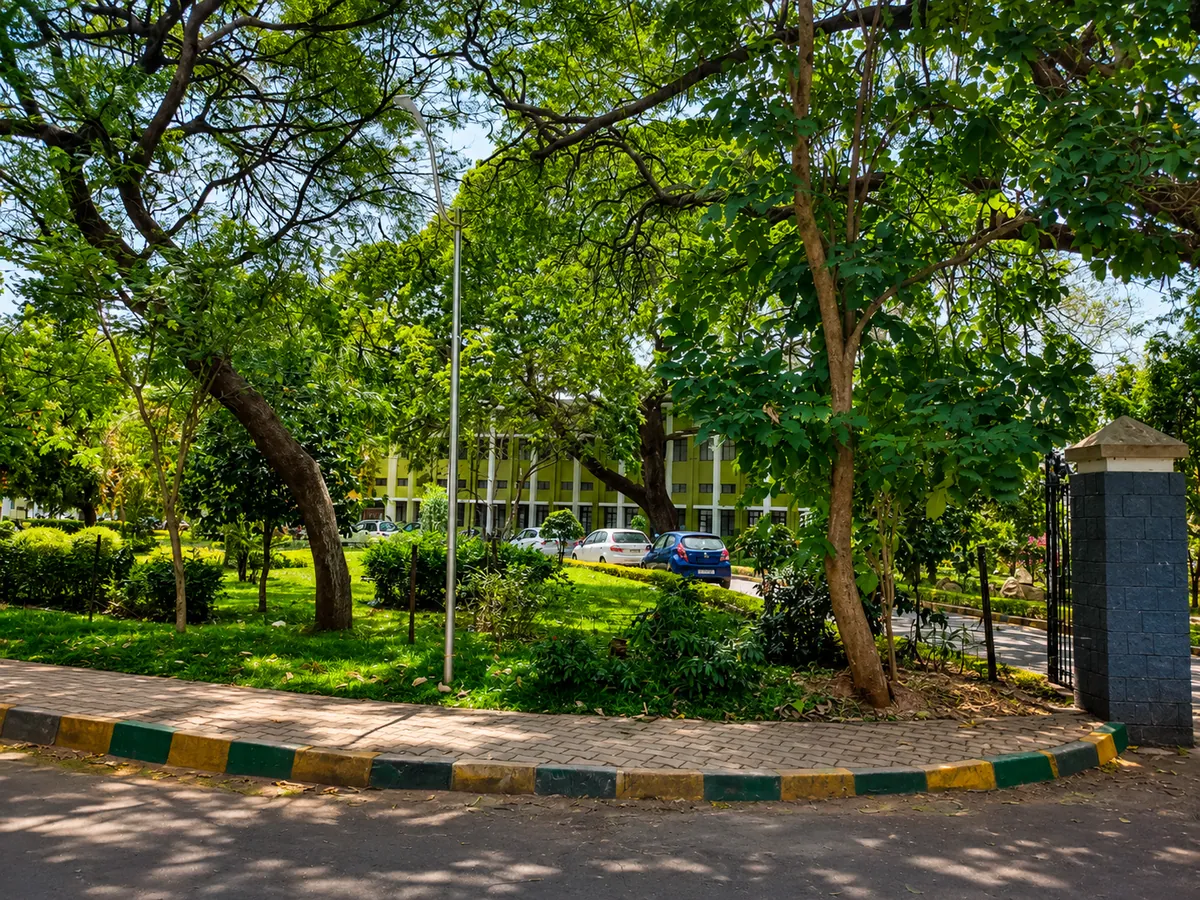

Environmental sustainability has become an integral part of the University’s identity. The extensive use of solar-powered street lighting, solar water heating systems across hostels and the preservation of expansive gardens and green spaces demonstrate its commitment to responsible campus development. Equally important is its focus on student welfare. Dedicated support services encourage participation in literary, cultural, sporting and youth festivals at state, national and international levels, enabling students to develop confidence, creativity and leadership beyond academics. The University’s inclusive learning environment continues to foster holistic personal growth alongside intellectual achievement.
Guided by Timeless Ideals
The University’s philosophy is reflected in its enduring vision to become a world-class institution by nurturing talent across all sections of society through interdisciplinary education, innovative research and meaningful community engagement. Its emblem carries two profound Sanskrit ideals: “Na Hi Jñānena Sadrśam”—”Nothing is equal to knowledge”—drawn from the Bhagavad Gita, and “Satyamevoddaharamuaham”—”I always uphold the truth.” These timeless principles continue to guide generations of students, scholars and educators in their pursuit of academic excellence and ethical leadership.
A Legacy That Continues to Inspire
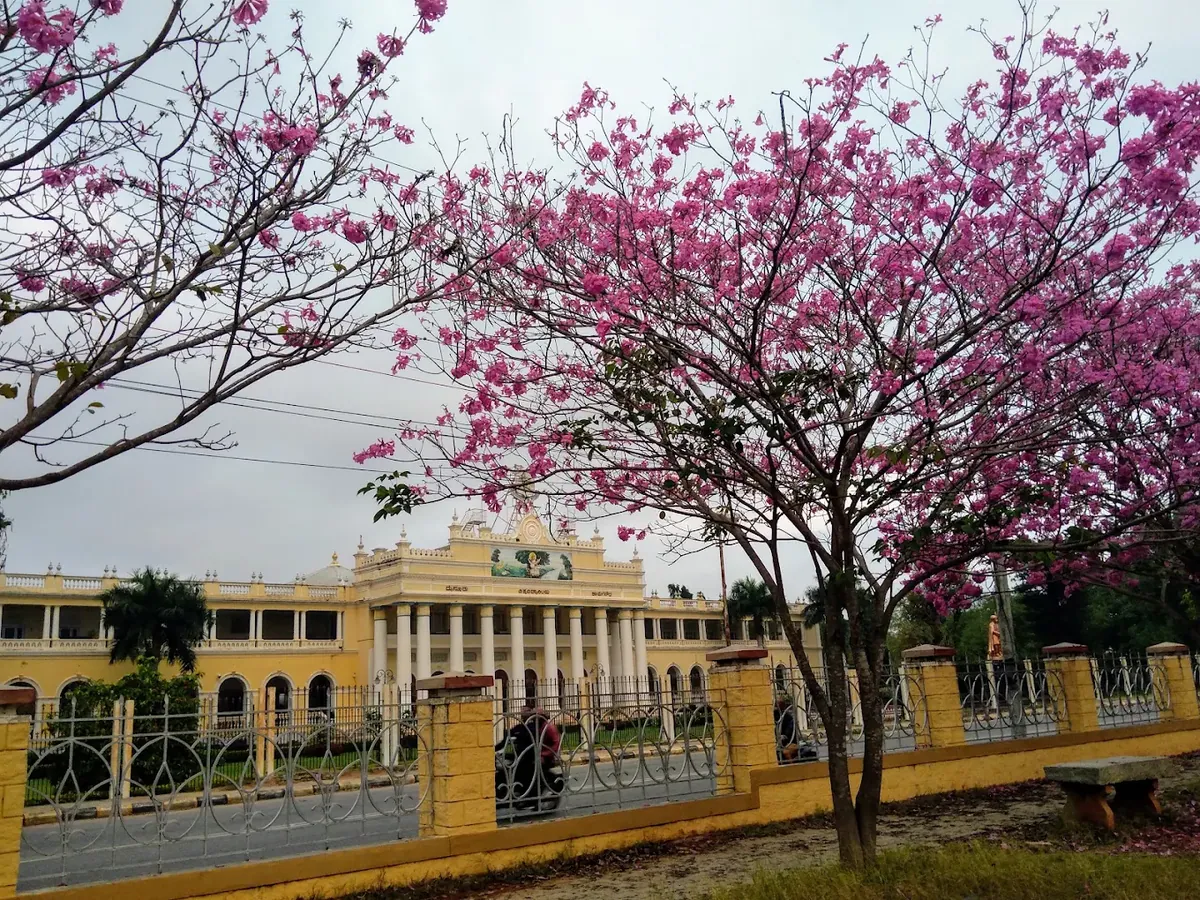
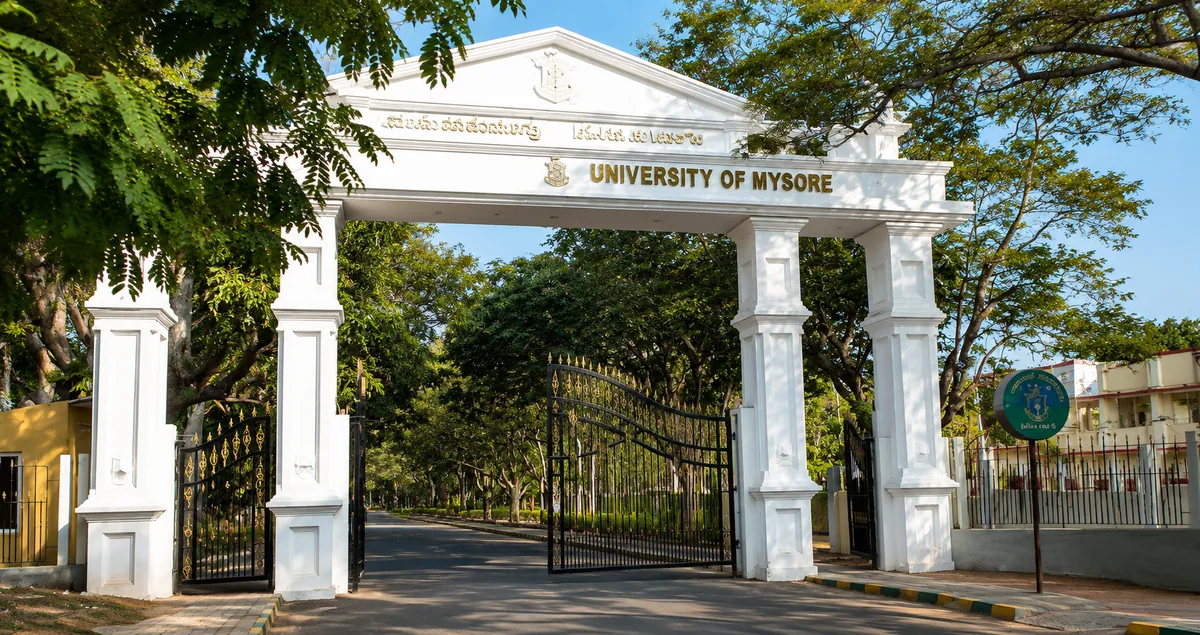
More than a century after its establishment, the University of Mysore remains one of India’s most respected centres of higher learning. Its remarkable journey—from a visionary institution founded by enlightened rulers to a globally connected research university—reflects an unwavering commitment to knowledge, innovation and public service. As higher education enters an era shaped by digital transformation, interdisciplinary research and international collaboration, the University continues to evolve while preserving the ideals upon which it was founded. Its enduring legacy is not merely measured by the degrees it awards or the rankings it achieves, but by the generations of thinkers, innovators and leaders it continues to inspire—individuals who carry forward the University’s timeless belief that knowledge, guided by truth, has the power to transform society.